

Building customer loyalty for DTC businesses in the post-pandemic age
Why build a relationship with e-commerce customers?
Your loyal customers are an immense asset to any business. Not only can they provide a regular source of revenue, but they can also help cut down the need for expensive and time-consuming customer acquisition efforts.
A solid customer base can lend credibility to your brand and encourage others interested in your brand to take the plunge and try out your products. When it comes to Direct-to-Consumer (DTC) businesses, there is even more at stake- with you handling all parts of the customer journey, your reputation is front and center.
Though the benefits of maintaining strong relationships with your customer are clear, building them can be a tricky business. You’ll need to understand and adapt to an ever-changing roster of needs that has only become more complicated in the aftermath of the COVID-19 pandemic.
Customers now expect not only faster deliveries but quicker and more personal customer service, driving up costs to serve. With competition steep and growing as more brands take to the online sphere, more time and effort must also be invested in acquiring, engaging, and retaining customers.
Read on to learn how a few simple changes can transform your customers’ one-time purchases into long-term investments in your brand.
Click here to learn how we’re helping our customers maximize their post-purchase experiences.
What is the value of a strong customer relationship for Direct-to-Consumer brands?
Though smooth purchasing and post-purchase experiences are essential, developing strong customer relationships goes beyond this.
What is necessary for these endeavors is building trust and confidence alongside a strong appreciation of your products and what your brand stands for. In an age of uncertainty, customers need to know purchases are unlikely to go wrong and, if they do, you’ll be there to swiftly handle things while keeping them in the loop.
While strong impressions of your brand might put you into the ring when customers are weighing their options, it might ultimately be feelings of reliability that truly move them to check out again and again.
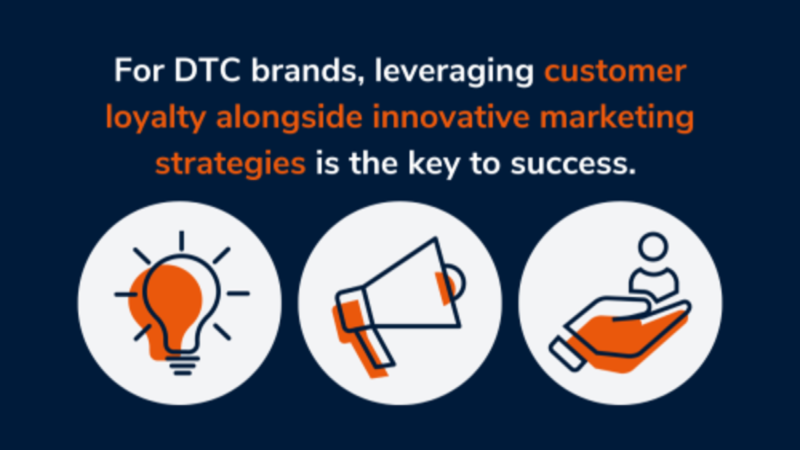
For DTC brands, leveraging customer loyalty alongside innovative marketing strategies is the key to success.
Who is the post-pandemic DTC consumer?
The COVID-19 pandemic forced businesses and consumers to rapidly adapt to changing circumstances. As physical shops shuttered across the globe to prevent the spread of the virus, consumers flocked online, producing a boom in e-commerce.
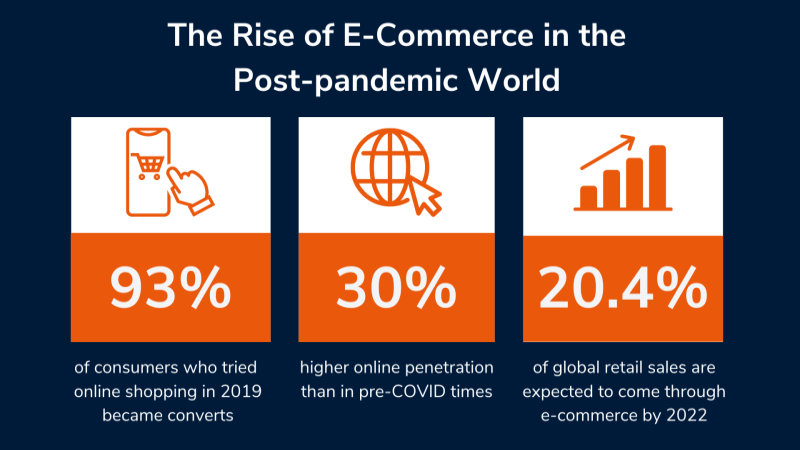
Despite the waning pandemic, shifts in consumer habits remain the same. 92% of consumers who tried online shopping in 2019 became converts, and though brick and mortar stores reopened in August 2021, online penetration was 30% higher than in pre-COVID times. By 2022, e-commerce is expected to make up 20.4% of global retail sales, up from 10% just five years ago.
It is not only the quantity and frequency of online consumers that have increased, however. Consumers’ relationships and expectations of online shopping experiences have also soared through the pandemic.
With greater exposure to both good and bad delivery experiences, and inundated with options as more retailers hop online, these consumers have come to expect more from retailers. They are not afraid to exercise their freedom of choice. With 39% of consumers ditching trusted brands for new ones during the pandemic, brands now find themselves in an environment of heated competition but also of opportunity as consumers explore new retail options.
It is precisely these opportunities that DTC businesses are hoping to bank on. By going directly to potential buyers, businesses can reduce costs, both for themselves and consumers. More importantly, however, this also opens up opportunities for them to focus on providing customers with the products and experiences they want.
With consumers of all backgrounds on the hunt for brands that meet their needs and align with their values, building a strong relationship with consumers, generating powerful brand impressions, and providing reliable services has become more important than ever.
How can DTC brands strengthen customer relationships with elevated post-purchase experiences?
McKinsey research suggests that repurchase decisions are heavily influenced by the post-purchase experience. Despite this, many brands curate journeys only until the checkout button, and shoppers feel it- 83% think brands don't care about the experience after checkout.
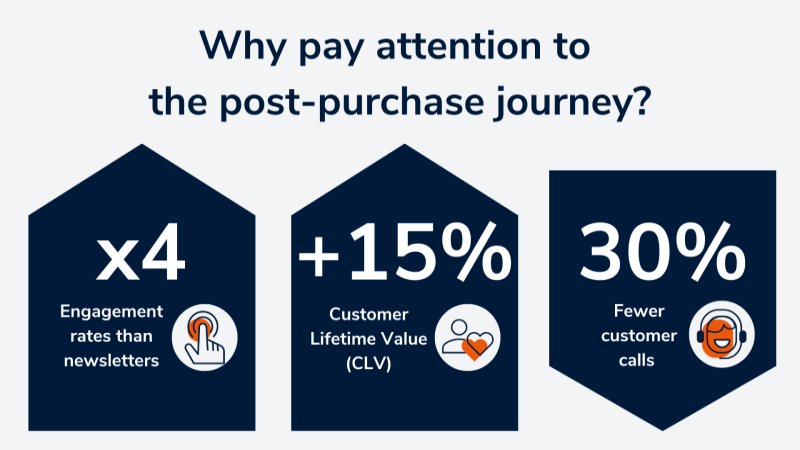
By making just a few changes to customer journeys after checkout, retailers could increase Customer Lifetime Value (CLV) by 15%, reduce inbound customer calls by 30%, and tap on upselling opportunities with engagement rates four times higher than newsletters.
1. Be the one to break delivery news to your customers
Rather than simply hand customers over to delivery partners after orders are confirmed, take charge of communications about delivery processes to create consistently great customer experiences and strengthen impressions of your brand.
Tracking pages draw a great deal of customer attention. According to Metapack’s 2019 State of eCommerce Delivery Report:
90% of shoppers track the delivery status of their online orders
40% of shoppers check an item’s order status at least once a day
Each parcel generates an average of 4.6 contact points
Major industry leaders have thus turned to branded tracking pages as an efficient solution.
With all these eyes on tracking pages, they are not only great ways to build trust in your brand by generating a sense of transparency, but they also offer excellent opportunities for upselling and customer engagement.
2. Provide customers with information they can trust
When it comes to e-commerce, consumers’ anxieties often revolve around the delivery process. They want to know exactly where their parcels are and when they will arrive. Providing close to real-time updates on where their shipments are and accurate estimated delivery dates is key to earning trust.
In times of increasingly complicated logistics processes and unpredictable global events, however, generating information that’s accurate and stays that way can be a real challenge.
Big data, however, can help: leading players in logistics have developed solutions that make use of machine learning algorithms to make sense of historic data and take into account a wide range of moving parts from warehousing concerns to global trends.
Leveraging these capabilities, retailers could give customers date of arrival prediction estimates that are up to 90% accurate and help give them the confidence to hit the checkout button every time.
3. Reach out proactively
Delays in deliveries are never ideal, but with some careful maneuvering, they too could be an opportunity to build customer confidence and loyalty.
As the service recovery paradox tells us, customers who face a service failure that companies quickly and smoothly resolve could develop stronger senses of loyalty than customers who faced no issues. Proactive and exceptional customer service are crucial to achieving this.
With 82% of consumers reporting having been disappointed with customer service experiences and 32% unwilling to continue purchasing from a company after just one negative service experience, the stakes are high when it comes to communicating with customers.
Take checkpoints in the delivery process as opportunities to reach out first and proactively provide customers with information they want and need.
Mitigate the impact of unfortunate circumstances like order delays by sending out apology emails ahead of expected delivery dates to manage customer expectations. Small gestures like issuing discounts on a future purchase could even turn disappointment into excitement.
Resolve issues before they impact a customer's experience and you reassure them of a seamless and worry-free experience with your brand, ultimately resulting in customer loyalty.
4. Deliver smart and timely notifications with a personal touch
Today’s customers want to be engaged and may become frustrated when brands fail to meet them where they are. 76% of consumers reported that they feel dissatisfied when companies fail to deliver personalized interactions. With 32% to 39% of customer inquiries relating to delivery issues, this is a crucial opportunity to elevate your customer service game.
The post-purchase experience is an excellent opportunity to make lasting impressions that many companies fail to take advantage of, with 60% of consumers rating it as underwhelming.
Here, customers anticipate their purchases in excitement and anxiety but are often left to experience this wait alone. Take the time to connect with your customers when it matters most - in ways they’re comfortable with.
Pay attention to the channels through which customers want to be reached. Email, push notifications, or SMSes are a straightforward way to make customers feel seen and ensure important messages reach them on time.
Ensuring they receive messages in their language is another important way to show customers you care about who they are. Doing this can prevent frustration and increase post-purchase customer satisfaction.
These minor strategic tweaks will help generate strong positive impressions for your brand and interject a personal touch into experiences that could make 78% of consumers more likely to repurchase.
Key Takeaways:
Post-pandemic consumers demand quicker, smoother, and more personalized customer experiences. The post-purchase experience is a critical area that brands could leverage to meet consumer needs, generate strong impressions and customer loyalty.
A mere 5% increase in customer retention can increase company revenue by up to 95%. Building strong customer relationships is thus more important than ever for DTC brands to seize exciting market opportunities.
_______________
Parcel Perform is the leading delivery experience platform for businesses worldwide to create unique end-to-end customer journeys and optimize logistics operations.
Check out our client success stories to learn more about how we’re helping leaders in the field tackle last-mile delivery experience and logistics challenges.
You might also like
Predictive Logistics: How AI Turns Carrier History into Forward-Looking Decisions
Stop reacting to delays. See how AI turns historical carrier data into forward-looking logistics decisions. — Read on fo
Sep 02, 2026
Parcel Perform
Why Ecommerce Brands Need an MCP Layer for AI Shopping Agents
AI shopping agents are changing e-commerce. Learn why brands need an MCP layer to control logistics and win sales.
Sep 01, 2026
Parcel Perform
Why AI Returns Management Needs Carrier Data, Not Just Policy Rules
Stop relying on static return rules. See why real-time carrier data is the missing link in reverse logistics. — Read on
Aug 31, 2026
Parcel Perform