

Ecommerce Post-Purchase: 3 WISMO Tickets = 3 Lost Orders
A customer who submits three WISMO (Where is my order?) tickets is a customer you have already lost. Repetitive delivery inquiries are not just support requests; they are the loudest signal of broken trust driving immediate churn. When shoppers are forced to hunt for tracking updates, retention drops and support costs spike.
Retailers treat post-purchase inquiries as an inevitable cost of doing business. Operations teams budget for a certain percentage of orders resulting in support contacts, staffing up during peak seasons to handle the influx. This approach treats the symptom while ignoring the disease. A delivery inquiry is rarely just a request for information; it is an indicator of friction. 80% of customers will switch to a competitor after more than one bad experience. If a buyer has to ask you where their package is, the delivery experience has already failed.
The Hidden Math of Post-Purchase Friction
The hidden math of post-purchase friction reveals that the true cost of a WISMO ticket is not just the agent's hourly rate, but the total loss of customer lifetime value (LTV). Operations leaders who only measure the direct cost per resolution are missing the larger financial impact.
Consider the typical customer acquisition cost (CAC) in modern retail. Marketing teams spend aggressively to bring a shopper to the site, convert them, and secure that first purchase. When that order is delayed without communication, the entire acquisition investment is jeopardized. 94% of consumers say their delivery experience directly impacts their brand loyalty. The financial damage compounds rapidly. Losing a customer over a five-dollar shipping delay means losing every future purchase that buyer would have made over the next three years.
One ticket is a question. Two tickets indicate a systemic issue. Three tickets drive immediate churn. Retailers view these interactions in isolation, but consumers view them as a cumulative failure of brand competence. Forcing buyers to manage their own delivery exceptions permanently alienates them.
Traditional Ecommerce Tracking Fails the Modern Shopper
Traditional ecommerce tracking fails because it relies on fragmented, delayed carrier data that leaves shoppers guessing during critical delivery milestones. Directing a customer to a carrier's native tracking page surrenders control of the customer journey exactly when anxiety is highest.
Carrier updates are notoriously cryptic. Statuses like "Exception" or "Processing at Facility" mean nothing to the average consumer. Worse, these systems are prone to silent failures. A package might sit in a sorting hub for 48 hours without a status change, leaving the customer completely in the dark. This lack of delivery transparency forces the buyer back to the retailer's support channels to demand answers the brand does not have.
The consequences begin even before the purchase is finalized. 23% of shoppers abandon carts due to slow delivery, but the damage extends well past checkout when the post-purchase experience is equally opaque. When retailers rely on basic tracking links, they are effectively outsourcing their brand reputation to third-party logistics providers who have no incentive to prioritize the shopper's experience.
The Cascading Support Load: A Reactive Death Spiral
A reactive death spiral occurs when a single delayed parcel triggers multiple customer touchpoints, overwhelming CX teams and degrading service quality across the board. This cascading support load is the primary driver of operational inefficiency in post-purchase operations.
When a delivery goes wrong without proactive communication, the customer panics. They email customer service on Tuesday. When they do not receive an immediate reply, they follow up via live chat on Wednesday. By Thursday, they are posting negative comments on the brand's social media channels. One delayed order has now generated three distinct interactions across three different platforms, requiring multiple agents to investigate the same issue.
This volume spikes dramatically during peak seasons, creating a backlog that delays responses for legitimate product issues or high-value sales inquiries. CX teams are forced into a reactive posture, constantly apologizing for carrier delays they cannot control. This environment burns out agents, inflates operational costs, and destroys Net Promoter Scores (NPS). You cannot scale a business when your support infrastructure is entirely dependent on reacting to carrier failures.
Shifting from Reactive Support to Proactive Ecommerce Transparency
Shifting to proactive ecommerce transparency means alerting customers about delivery issues before they ever feel the need to contact support. The most effective WISMO ticket is the one that never gets created.
By anticipating delivery pitfalls and communicating them early, brands can reset expectations and maintain trust. Proactive communication can reduce customer service inquiries by as much as 30%. If a package is delayed by a weather event, an automated SMS explaining the situation and providing a new estimated delivery date transforms a negative experience into a neutral or even positive one. The customer feels seen and valued, rather than ignored.
This transition requires precise notification timing. Sending an alert too early causes unnecessary panic; sending it too late renders it useless. Retailers must move from reactive vs. proactive models by using real-time data to trigger communications at the exact moment an exception occurs. This level of precision requires a unified view of the parcel's journey, completely decoupled from the fragmented interfaces of individual carriers.
Solving the WISMO Crisis with AI-Driven Visibility
Solving the WISMO crisis requires an infrastructure that normalizes chaotic carrier data into a single, reliable source of truth for proactive communication. You cannot automate what you cannot accurately see.
The root cause of poor post-purchase communication is fragmented carrier data. Thousands of different carrier statuses exist across the global supply chain, each with its own formatting and latency issues. To fix this, retailers need a system that translates this chaos into a standardized language. This is where AI Decision Intelligence becomes critical. By processing 100 billion+ annual parcel data points, this foundational engine standardizes data from 1,100+ carriers into 155+ standardized shipping event types.
This normalization provides the operational legibility required to trigger accurate, timely alerts. When CX teams have full order visibility, they stop hunting for updates across multiple carrier portals and start managing exceptions strategically. The data becomes a structured asset that powers automated workflows, rather than a liability that generates support tickets.
Parcel Perform Transforms Delivery Pitfalls into Retention
Parcel Perform transforms delivery pitfalls into retention by deploying advanced notification triggers that intercept issues before they become support tickets. The platform provides the exact infrastructure needed to execute a proactive retention strategy.
The Post-Purchase Experience product, enhanced by AI Decision Intelligence, gives CX teams the tools to eliminate silent failures entirely. With 88+ advanced triggers, retailers can configure Wow-Factor Notifications that keep customers informed at every critical step. The platform includes Proactive Pitfall Management for 25+ common delivery issues, ensuring that when an exception occurs, the customer hears it from the brand first, not the carrier.
This proactive approach yields a measurable impact: up to 63% reduction in WISMO contacts. By intercepting these inquiries, brands drastically reduce their support costs while simultaneously protecting customer LTV. The platform also provides AI-generated summaries and root cause analysis, allowing operations teams to identify exactly which carriers, routes, or regions are driving the most friction.
The tension between carrier operational limits and consumer expectations is only widening. As logistics networks face increasing pressure from localized disruptions and capacity constraints, the brands that survive will be those that decouple their customer experience from carrier performance entirely. The question is no longer whether a delivery will fail, but whether your infrastructure can catch the exception before the customer does. Seeing this decoupled architecture in action on our demo page reveals how the industry is moving past the carrier tracking link.
Frequently Asked Questions
What is a WISMO ticket in ecommerce?
A WISMO (Where is my order?) ticket is a customer service inquiry regarding the status or location of a pending delivery. These tickets are a primary driver of support costs and indicate a lack of proactive communication in the post-purchase journey.
How does delivery experience impact customer retention?
Delivery experience directly impacts retention by setting the final impression of a brand. When deliveries are delayed without communication, trust is broken, making customers highly likely to switch to a competitor for their next purchase.
Why is carrier tracking data often delayed?
Carrier data is often delayed due to fragmented legacy systems and infrequent scanning at sorting facilities. This creates visibility gaps where a package's status remains unchanged for days, leading to customer anxiety and increased support volume.
What is proactive pitfall management?
Proactive pitfall management is the operational strategy of identifying delivery exceptions—such as weather delays or incorrect addresses—and automatically notifying the customer before they realize there is a problem, thereby preventing a support ticket.
How will AI change post-purchase tracking in the future?
AI will shift post-purchase tracking from reactive reporting to predictive intervention. Systems will increasingly anticipate delays before they happen, automatically rerouting parcels or triggering highly personalized communications to maintain trust.
#Businessleaders
#ITprocurementteams
#Customerserviceteams
#Logisticsoperations
#Ecommercemarketing
#Track
About The Author

Parcel Perform is the leading AI Delivery Experience Platform for modern e-commerce enterprises. We help brands move beyond simple tracking to master the entire post-purchase journey—from checkout to returns. Built on the industry's most comprehensive data foundation, we integrate with over 1,100+ carriers globally to provide end-to-end logistics transparency. Today, we are pioneering AI Commerce Visibility—a new standard for the age of Generative AI. We believe that in an era where AI agents act as gatekeepers, visibility is no longer just about keywords; it’s about proving operational excellence. We empower brands to optimize their trust signals (like delivery speed and reliability) so they are recognized by AI, recommended by algorithms, and chosen by shoppers.
You might also like
Fixing Hallucinations: How to Overwrite the AI's Memory About Your Brand
Stop AI agents from hallucinating outdated logistics failures. Overwrite LLM memory using verified operational data.
May 21, 2026
Parcel Perform
Return Windows as Trust: Marketing Lever or Just a Cost in E-commerce?
Stop treating reverse logistics as a sunk cost. See how AI agents read your e-commerce return window as a trust signal.
May 14, 2026
Parcel Perform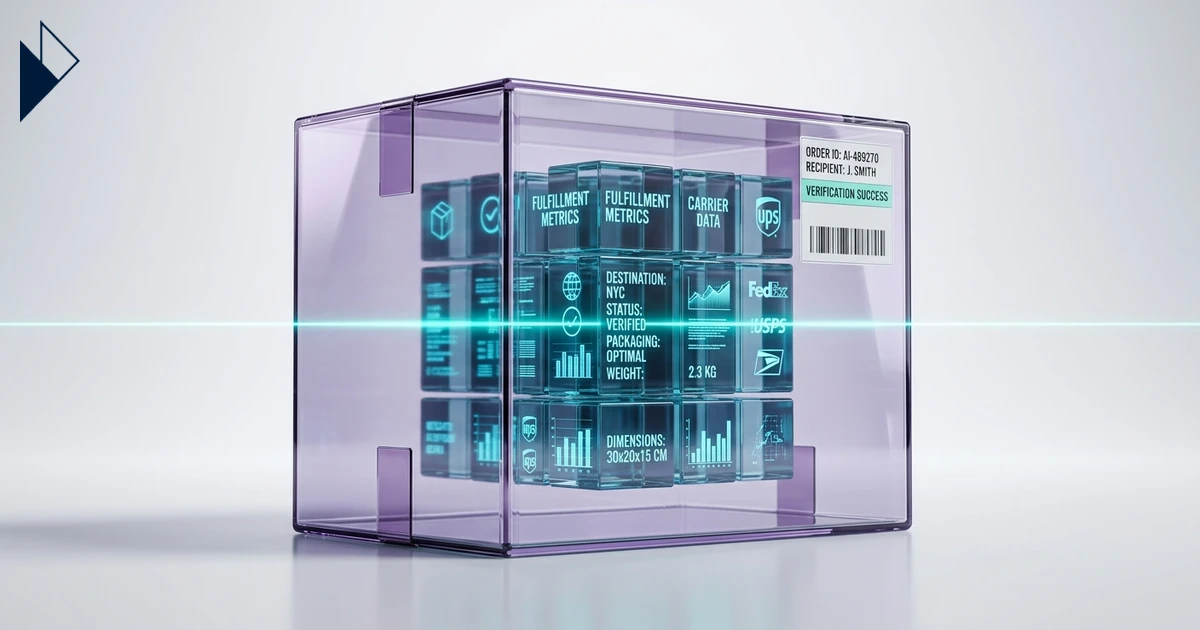
Why E-commerce Brands Lose AI Rankings Without Unified Carrier Data
AI shopping agents ignore marketing copy. See why unified carrier data is the trust signal that decides e-commerce.
May 12, 2026
Parcel Perform