

Preparing for 2020's Peak Season: What retailers need to know about notifications
How will 2020 peak season for retailers pan out this year?
COVID-19 has popularised e-commerce shopping behaviour and encouraged consumers to shop online for essential and non-essential items traditionally bought in-store. This year, retailers are heading into new territory, characterised by unique challenges created by the ongoing global pandemic.
How will 2020’s peak season differ from previous years?
The ongoing pandemic has created and accelerated several effects on e-commerce operations.
E-commerce’s popularity has skyrocketed:
Limitations on offline shopping and safe distancing measures in brick and mortar shops ensures customers turn to e-commerce. This increased popularity of e-commerce also means there’s more complexity to handle when tracking outbound orders and parcel returns.
Customer expectations are rising:
A 2019 holiday study by Deloitte revealed that over 85 percent of holiday shoppers picked free over fast shipping. With more global competition across the board, customers will demand a more seamless post-purchase experience; speedy service and clear communication from retailers to remain loyal. Customers today are anxious, expecting delays in shipments and unsure how the pandemic will affect shipping times during 2020’s peak season.
More socially distanced measures create strain on customer service, operations and logistics teams:
Safe distancing measures in warehouses and higher delivery volumes create strain for both your logistics teams and customer service teams to keep up. Research from Signifyed shows that BOPIS (buy online pick up in-store) orders have more than doubled globally.
Some experts are also dubbing this an extended holiday season to mitigate challenges in stock and shipping capacity to deal with the fourfold (or more) increase in delivery volumes usually seen during the peak season.
Despite these developing circumstances, the fundamentals of excellent customer experience during an e-commerce peak season remain familiar to retailers. There’s a pressing need to take strategic action to ensure you excel in the customer experience during the upcoming peak season.
In this article, we’ll focus on what we know about e-commerce behaviour over the last few months and how best to prepare for the peak season
How can retailers prepare for 2020’s peak season?
According to a report by the US Census Bureau, e-commerce sales in the US increased by 44.5% over the last quarter as compared to the second quarter a year before. Logistics carriers are also seeing peak-like volumes throughout the pandemic.
With 70% of U.S consumers alone intending to make most of their holiday purchases online, It’s clear that we’re operating from a higher delivery volume baseline as before and a different consumer mindset and preferences as compared with previous years.
But, a few things remain consistent: customers want to be kept up-to-date with the latest information on their orders. 70% of customers said in a survey that the ability to track orders was one of their top 3 considerations when buying a product online whereas 56% said it was a top consideration when ordering a luxury item.
With global shopping festivals like Black Friday, Cyber Monday, the 11.11 Singles Day sale, Boxing Day and Christmas Day on the way, consumers around the world are ready to spend. This means it’s the perfect season for you to capture as many customers as possible with a fantastic customer experience.
Yet, data from Shopify finds that 64% of customers gained during peak season do not buy from them again after the peak season. But there're ways to get around it by with strong post-purchase communication.
Post-purchase communication principles in the light of 2020’s peak season
Err on the side of over-communicating through the customer delivery journey
During peak season, your customers want to know where their parcels are through every step of the delivery journey.
A winning post-purchase experience journey reflects your brand consistently, instills confidence in your customers that you care about them and creates a unified customer experience throughout their buying journey.
Start with these essential components of the post-purchase experience:
A branded tracking page in the retailer’s branding, colours and feel:
The branded tracking page becomes a place where your customers can track their orders. It should deliver the latest tracking updates to your customers, visually pleasing and easy to comprehend. Plus, integrate with our Date of Arrival Predictions to provide unambiguous arrival date predictions during the delivery journey for the optimal post-purchase experience.
Proactive delivery updates for your customers:
Customers want to hear from you after the parcels have been shipped out! Don’t miss these prime engagement opportunities to establish trust with them during this crucial period by providing estimates on delivery date and updates on the delivery journey.
Issue notifications to reassure your customers in the light of delivery delays:
COVID-19 has increased the likelihood of delivery delays. Whether it’s delays in the operational or logistics side, providing transparency and solid tracking will help reassure and demonstrate your care for your customers. Ultimately, it’ll help present a strong, united brand image to your customers during this critical peak season.
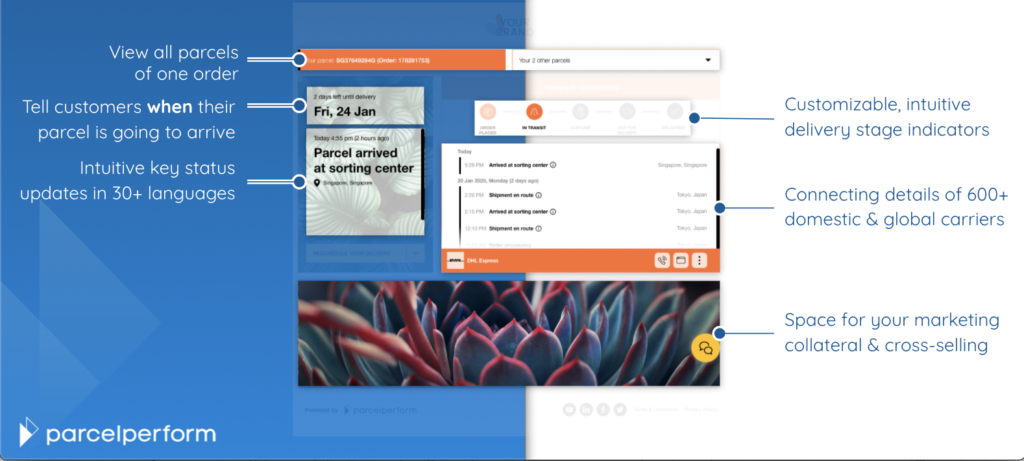
Build relationships with your customers after checkout with high-engagement notifications throughout the delivery journey:
Your customers want to know where their parcels are, even more during peak season. These are all engagement opportunities for upsetting or deepening your relationship with your customers.
What do customers want to hear in their post-purchase communications?
A study by IBM revealed the post-purchase notification opportunities that most influenced where consumers chose to shop:
Tracking online or mobile orders via any combination of channels – 88%
Consistently accurate, on-time delivery of Web/Mobile purchases – 88%
Notification of delays with an order or its delivery – 90%
Notification when an order has been delivered – 88%
In-store return of online/mobile purchases – 87%
With an idea of what your customers are looking for, you can tailor your notifications and post-purchase communication strategy accordingly to address their needs.
From a marketing perspective, timed notifications during the delivery journey are extremely powerful. With the average open rate of your e-commerce newsletters hovering around 15-18%, we have seen substantially higher open and engagement rates of 80%+ for specific, personalised notifications in your own brand. It's a marketer's dream come true, especially when you're looking to capture as much attention from your customers as possible during this time.
A snapshot of how you can use personalized on-brand notifications to build relationships with your customers after checkout.
Manage customer expectations by providing continous updates to delivery dates throughout the delivery journey.
Remind customers about actions they need to take closer to the delivery date (providing a valid address, ensuring they're at home to receive the items; useful when handling bulky or expensive items)
Proactively notify receivers about potential delays to their orders and giving them a seamless way to contact your customer service team if they have any questions.
2020’s peak season: focus on making your customer’s delivery experience as easy as possible:
This term is becoming a cliche by now - but we are living in unprecedented times with the ongoing pandemic around the world.
Your customers themselves are navigating uncertainty, anxieties around personal safety and changes in their own circumstances. Or perhaps they’re unsure about how this holiday season will pan out in 2020. These concerns about receiving parcels on time and in one piece are amplified during peak season.
Hence, it’s more important than ever to focus on your customers and make their experience as easy as possible. Make their delivery experience a source of joy in these challenging times. Customers will naturally gravitate toward businesses that provide clarity, close updates and create confidence. Engage your customers by paying attention to their needs and focus on fulfilling them.
With comprehensive post-purchase notifications laid out and clear, solid tracking in your own brand with your own branded tracking page, you’ll have the major pieces to ensure a strong, sustainable post-purchase experience to prepare for 2020’s peak season.
You might also like

How Signed Agent Requests Secure E‑Commerce APIs and Checkout Data
Stop API tampering in its tracks. Learn how signed agent requests secure e-commerce checkouts and AI shopping bots.
Mar 20, 2026
Parcel Perform
The HTTPS Staging Site Myth: How Bots and AI Expose Your “Hidden” E‑Commerce URLs
Think your staging site is hidden? SSL certs expose dev URLs to AI bots via public logs. Learn how to secure your data.
Mar 19, 2026
Parcel Perform
The Phantom Visit Paradox: Understanding Direct Traffic Spikes & Flat Conversions
Is your direct traffic a lie? Discover the "Phantom Visit Paradox" and how AI bots are inflating your e-commerce data.
Mar 10, 2026
Parcel Perform