
Boosting E-commerce Conversions: Addressing Delivery Challenges in Europe and the Americas
Feb 13, 2025
E-commerce is experiencing rapid growth around the world. For instance, in Europe, the market is expected to reach $707.90 billion by the end of 2025 and $961.30 billion by 2029. Similarly, in the Americas, the e-commerce market is projected to hit $1,581.00 billion by the end of 2025 and $2,182.00 billion by 2029. As more businesses enter the online marketplace, competition is intensifying, making it crucial for e-commerce companies to stand out. One of the key factors influencing customer satisfaction and conversion rates is delivery. Fast and reliable delivery can significantly enhance a customer's shopping experience, encouraging repeat purchases and customer loyalty. Conversely, poor delivery performance can deter customers from returning, impacting overall business success. As online businesses grow, competition intensifies, and customer expectations soar, ensuring a smooth delivery experience is more critical than ever. But recent data paints a worrying picture: transit times are fluctuating, first-attempt delivery success rates are plummeting, and carrier issues are on the rise. It's clear that traditional logistics are struggling to keep up. To address these challenges, industry leaders are turning to AI-powered solutions for hyper-personalization, predictive logistics, actionable intelligence, intelligent automation, and AI-secured returns. Let's explore the impact of delivery on e-commerce conversions, the common challenges faced, and discuss how your e-commerce business and logistics providers can leverage them for success.
Understanding How Delivery Affects E-commerce Conversions
Ensuring fast and reliable delivery remains a vital aspect of the e-commerce experience, as it can significantly influence customer satisfaction and conversion rates. When businesses fail to achieve efficient deliveries, it can result in negative customer experiences, decreased loyalty, and, ultimately, lost sales. In fact, studies have shown that 84% of customers are unlikely to return to an online store after just one negative delivery experience.
Furthermore, efficient delivery operations are essential for retaining customers and maintaining a positive brand reputation. Customers expect their purchases to arrive quickly and in good condition. When they receive timely and accurate deliveries, they are more likely to shop again and recommend the store to others. However, delays, damaged goods, or lack of updates can lead to frustration and dissatisfaction. Unfortunately, this can drive customers away and impact the business's bottom line.
Fluctuating Transit Times and Decreasing Delivery Metrics in Europe Throughout 2024
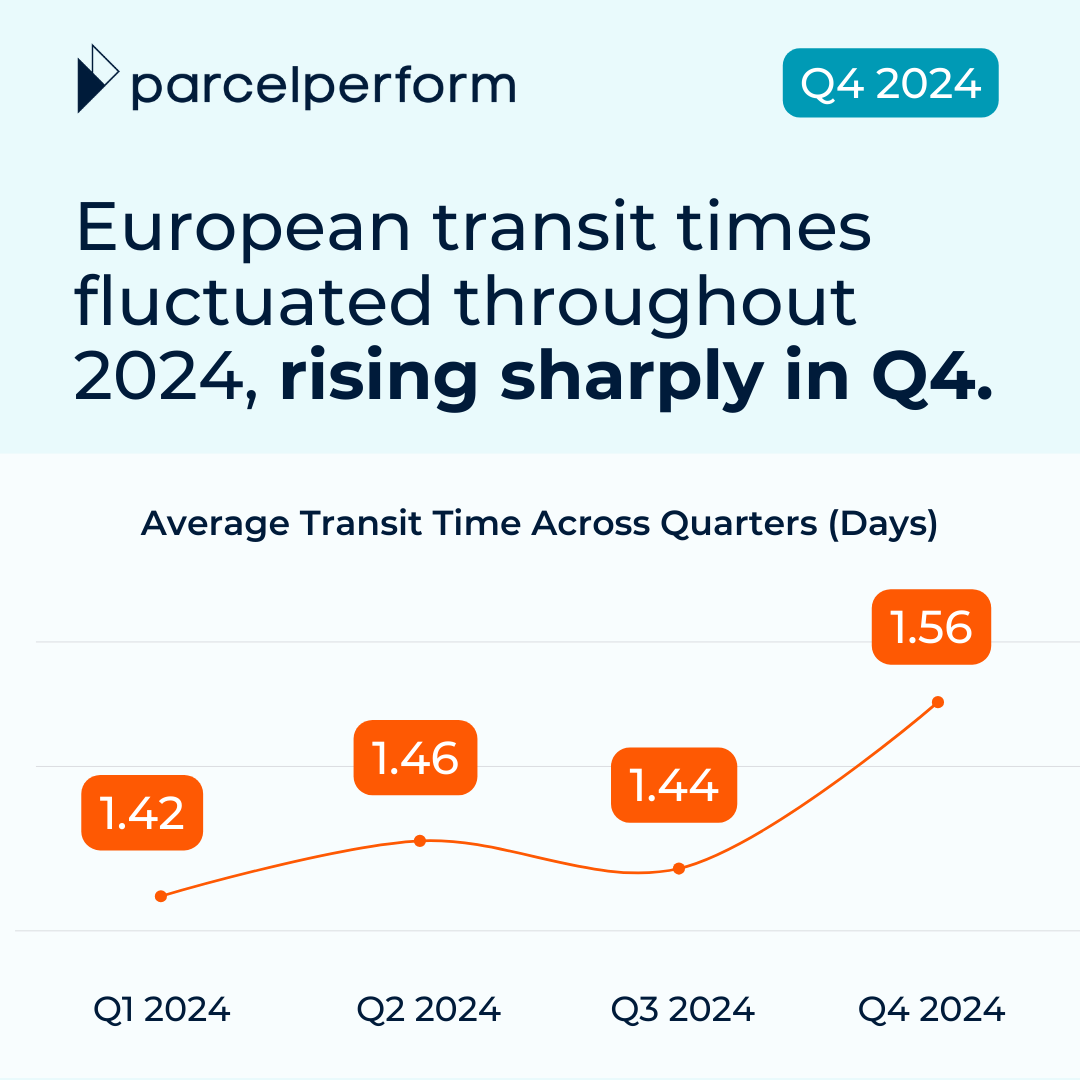
What's more, recent data from Q4 2024 highlights significant challenges in the delivery performance of e-commerce logistics providers across Europe. Based on the delivery data, average transit times increased from 1.42 days in Q1 2024 to 1.46 days in Q2 2024. It then slightly decreased to 1.44 days in Q3 2024, only to rise again to 1.56 days in Q4 2024. This fluctuation in transit times indicates inconsistencies in the delivery process, which can frustrate customers who expect reliable service.
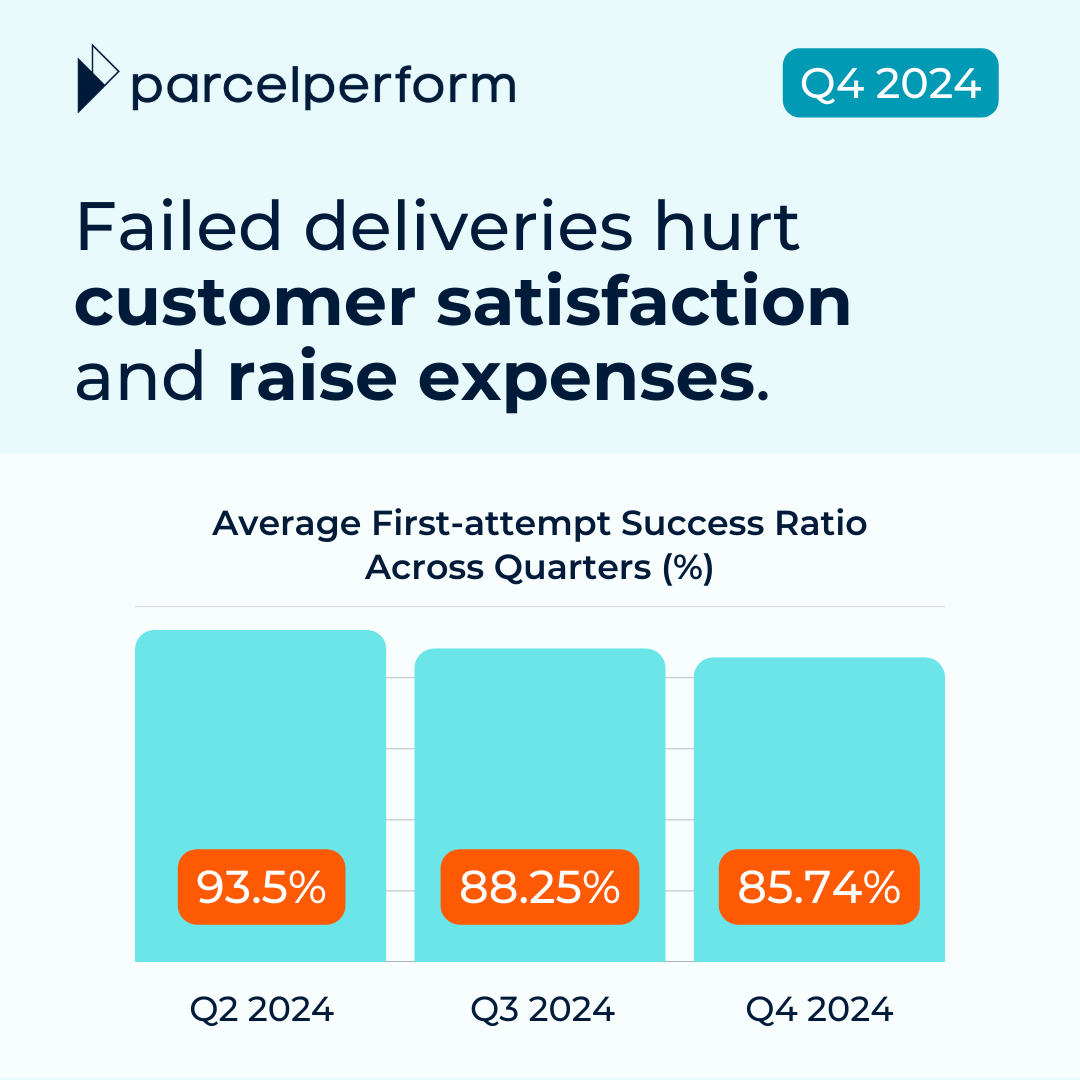
Additionally, the first-attempt delivery success rate dropped from 93.5% in Q2 2024 to 88.25% in Q3 2024, further declining to 85.74% in Q4 2024. The decrease in first-attempt delivery success rates means that more customers are experiencing failed delivery attempts, which can lead to dissatisfaction and increased operational costs for businesses.
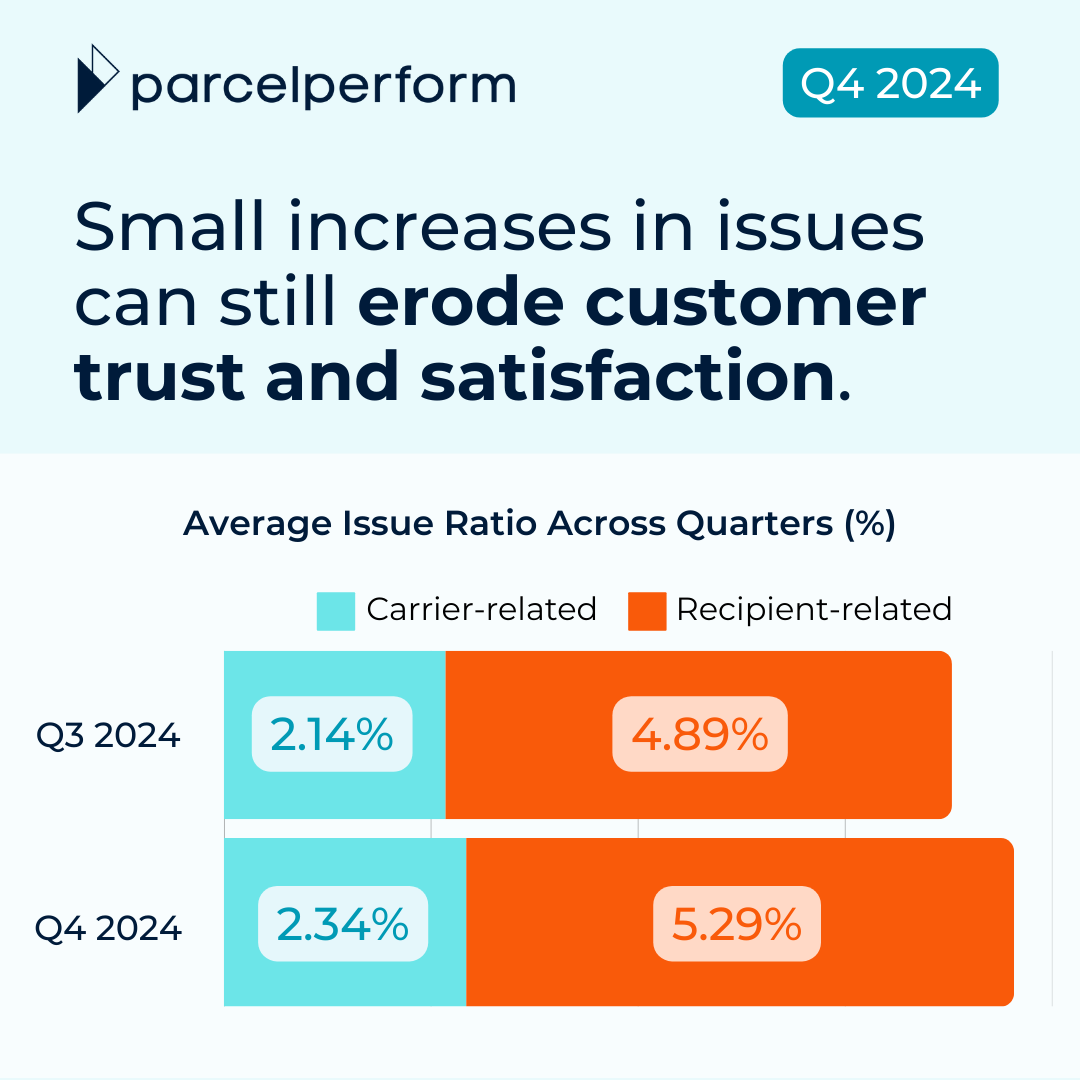
The carrier issue ratio also saw an increase, rising from 2.14% in Q3 2024 to 2.34% in Q4 2024. These trends indicate a pressing need for improvement in delivery performance, as consistent and reliable deliveries are critical for maintaining customer trust and satisfaction.
Declining Transit Times and Delivery Metrics in the Americas Across 2024
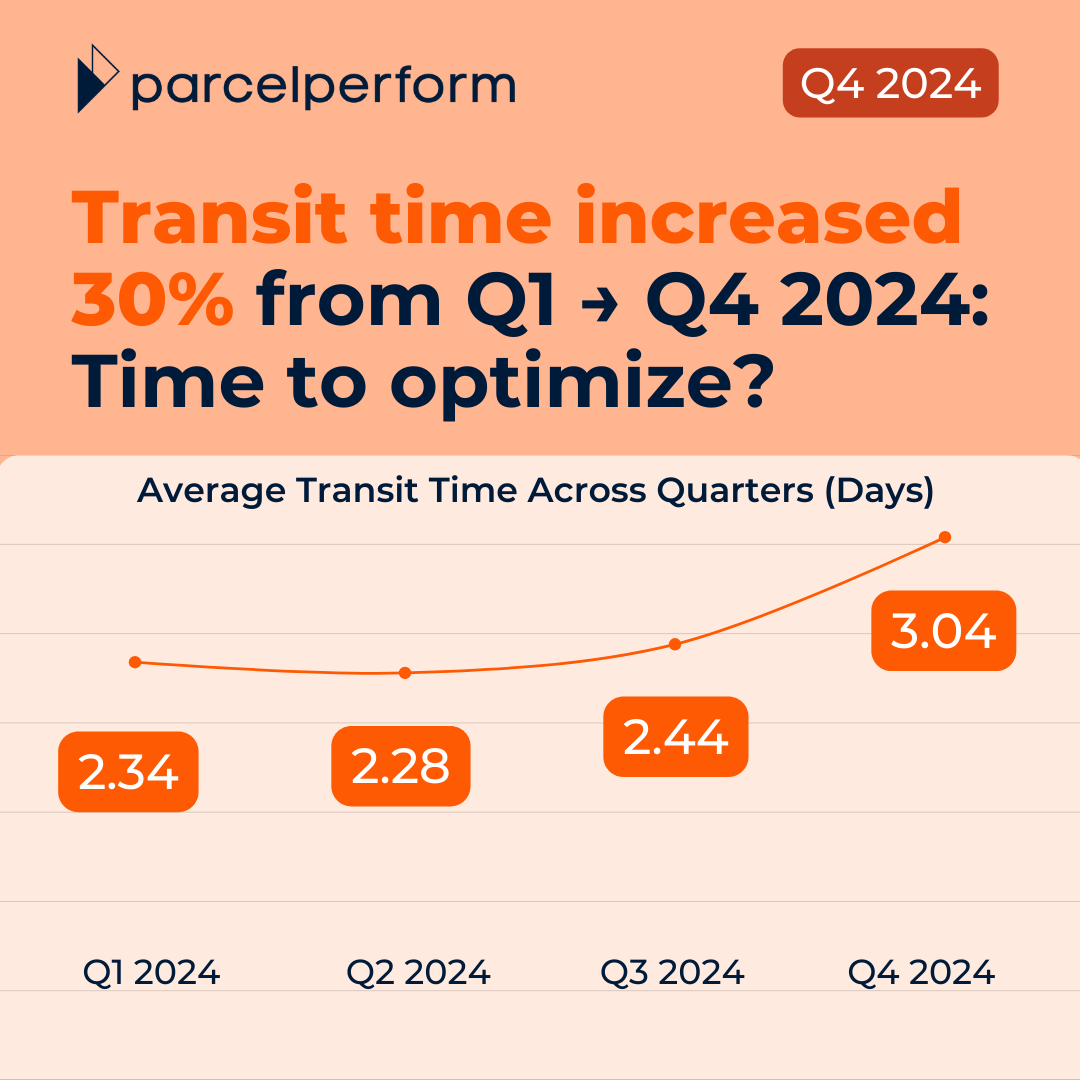
The Americas faced similar challenges with domestic deliveries in 2024. According to the available data, average transit times rose from 2.28 days in Q2 2024 to 2.44 days in Q3 2024, and further to 3.04 days in Q4 2024. Generally, longer transit times can affect customer satisfaction, as customers may become impatient and concerned about the status of their orders.
Furthermore, the first-attempt delivery success rate dropped from 97.54% in Q1 2024 to 95.92% in Q2 2024. This continued to decline to 92.2% in Q3 2024, reaching 88.25% in Q4 2024. The decline in the first-attempt delivery success rate suggests that more deliveries are not being successfully completed on the first try. However, this often leads to additional delivery attempts and increased costs for e-commerce logistics carriers and businesses.
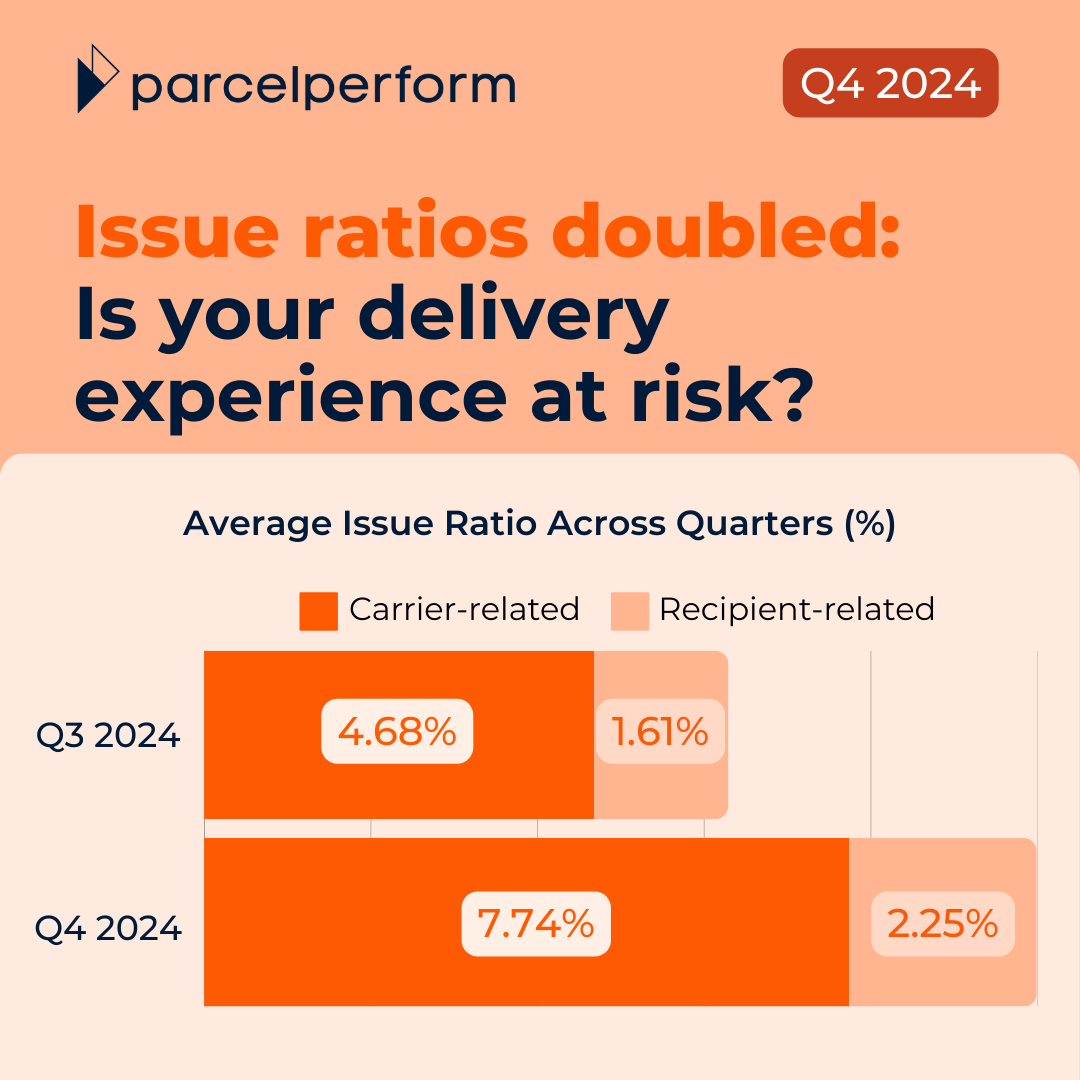
What's more, the carrier issue ratio increased from 4.68% in Q3 2024 to 7.74% in Q4 2024, indicating that more deliveries encountered problems during this period. These metrics underscore the urgent need for swift and effective solutions to enhance delivery performance and keep customers satisfied. Improving delivery processes and addressing these issues can help businesses build a more reliable and efficient logistics network.
Poor Delivery Experiences Leads to Lost Sales
Additionally, the impact of poor delivery experiences on sales can be substantial. As mentioned earlier, many customers and online shoppers are unlikely to patronize an online store again after a negative delivery experience. According to statistics, about 93% of customers want to be kept informed throughout the delivery process with proactive updates and transparent shipment tracking information.
As such, offering a variety of delivery options, including same-day or next-day delivery, can influence purchase decisions, as 74% of shoppers are more likely to buy from retailers that provide various delivery options. Losing customers due to delivery issues can lead to a significant decrease in revenue and hurt the overall growth of the business. To avoid lost sales and reduced revenue due to poor delivery experiences, businesses, as well as e-commerce logistics carriers, must optimize their delivery operations.
Transforming E-commerce Deliveries: From Frustration to Delight
While online shopping offers convenience, delivery hiccups can quickly tarnish a customer's perception of a brand. Let's explore some of the most common delivery challenges and how to overcome them:
Challenge 1: Delayed Deliveries
Delayed deliveries are a major source of frustration for customers. Whether due to unforeseen circumstances or logistical inefficiencies, late arrivals can damage customer satisfaction and loyalty.
Solution: Real-time parcel tracking empowers both businesses and customers with up-to-the-minute information on a package's whereabouts. This transparency manages expectations and reduces anxiety associated with potential delays.
Challenge 2: Communication Breakdown
Customers value staying informed throughout the delivery journey. A lack of updates can lead to uncertainty and a surge in customer inquiries.
Solution: Proactive delivery notifications via email or SMS keep customers in the loop, providing timely updates on their order status and estimated delivery time. This fosters trust and reduces the need for customers to chase down information.
Challenge 3: Inaccurate Delivery Estimates
Providing a reliable estimated delivery date is crucial for setting accurate customer expectations. Inaccurate estimates can lead to missed deliveries and disappointment.
Solution: Leveraging carrier performance analytics allows businesses to gain insights into the reliability and efficiency of different carriers. This data-driven approach helps optimize carrier selection and provides more accurate delivery estimates.
Challenge 4: The Returns Headache
Returns are an inevitable part of e-commerce, but a cumbersome returns process can negatively impact customer satisfaction.
Solution: A streamlined returns management system simplifies the process for both customers and businesses. Easy-to-use return labels, clear tracking information, and timely refunds can turn a potentially negative experience into a positive one.
By proactively addressing these delivery challenges, e-commerce businesses can enhance customer satisfaction, build brand loyalty, and ultimately drive success in a competitive market.
Final Thoughts - Solving Delivery Issues with Parcel Perform
Deliveries are make-or-break. Late packages, zero updates, and those vague delivery times? They're a recipe for customer frustration and lost sales. To keep your customers happy (and coming back for more!), you've got to nail the delivery experience. That means real-time tracking, proactive communication, accurate delivery estimates, and a hassle-free returns process.
Parcel Perform offers advanced solutions to tackle these delivery challenges. With features like real-time parcel tracking, carrier performance analytics, and automated delivery notifications, businesses can ensure timely and accurate deliveries. These tools not only improve customer satisfaction but also reduce the number of inquiries and complaints.
By adopting Parcel Perform's platform, e-commerce logistics providers and businesses can optimize their logistics processes, enhance customer experience, and build long-term trust and loyalty. Book a demo to explore Parcel Perform today. Discover how our innovative solutions can help your business succeed in the competitive e-commerce landscape.
You might also like

The Compliance Time Bomb: Why Your Dropshipping Tech Stack is a Ticking Liability
Your app stack is a compliance risk. Stop patchwork liability. Move to a unified, secure platform for AI-readiness.
Feb 16, 2026