
4 Types of Logistics Reports to Make Sense of Your Logistics Data and Analysis [+ Examples]
Today, online shopping is more than just easy; it's what people expect. Nearly half of consumers (48%) want delivery to be faster, reflecting the growing priority placed on quick service in their online shopping experience. This means that fast and smooth delivery is now key to keeping customers happy. It's not just about getting a package to someone; it's about building trust, encouraging repeat purchases, and creating a positive reputation for your brand. However, achieving this can be challenging. Modern supply chains are complex, and many factors can go wrong, turning a good delivery into a bad experience for the customer. That's where the power of logistics intelligence, informed by logistics data and enabled by logistics analysis, comes in. It provides the clarity and insights needed to navigate these complexities and proactively optimize your shipping performance. By harnessing the wealth of logistics data your logistics operations generate, you can perform in-depth logistics analysis to gain logistics visibility. This empowers you to identify bottlenecks, uncover trends, and make informed decisions that enhance efficiency, reduce costs, and ultimately elevate the customer experience. Parcel Perform provides Turnkey Business Intelligence built on industry best practices to give businesses a comprehensive view of their shipping performance. Here’s a quick look at some of the most important ones.
Overview of Shipments - Understand Shipment Trends to Optimize Resource Allocation and Routes
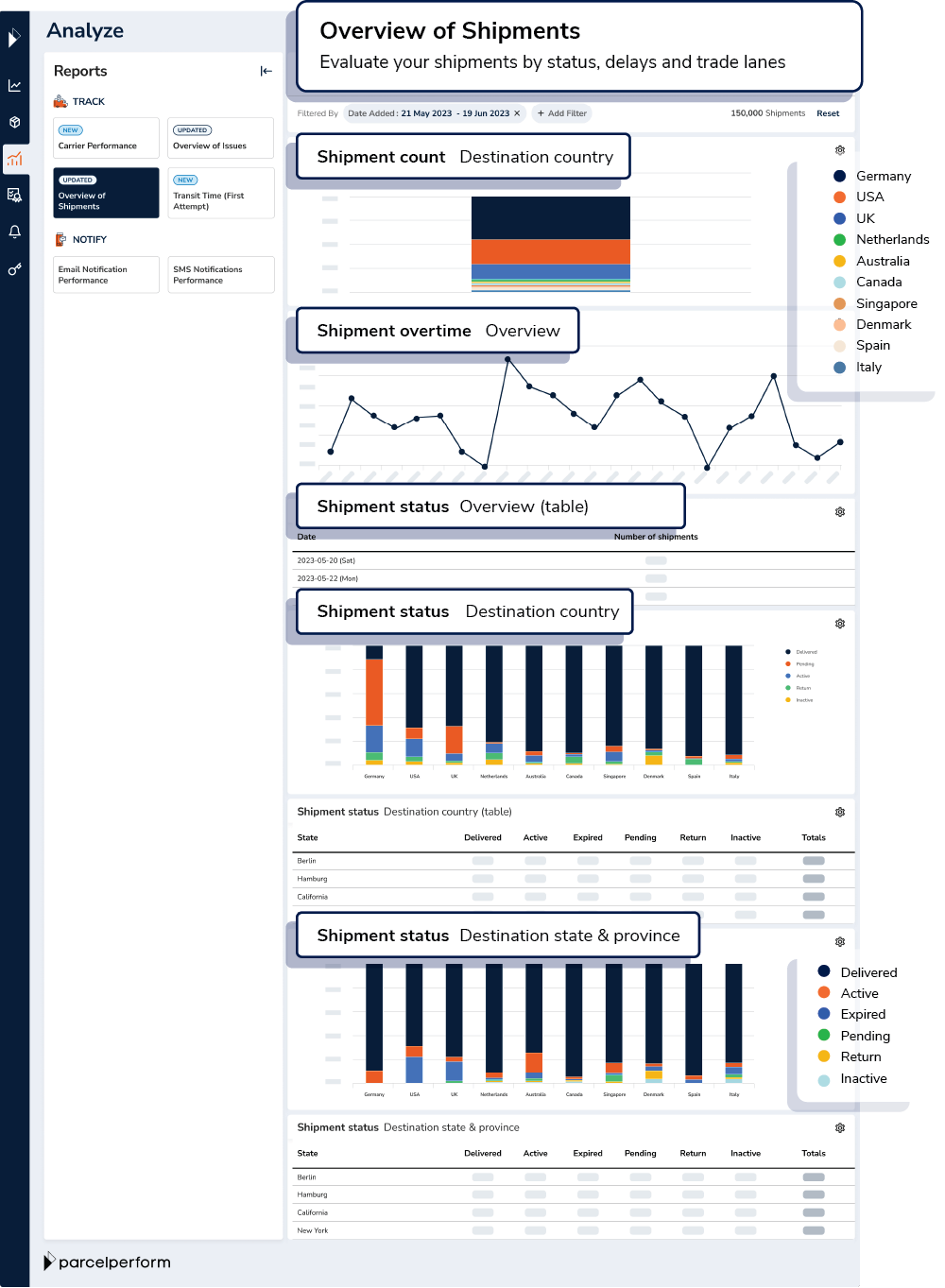
Overview of Shipments Report that allows you to understand key trends in shipment volumes at a glance including Shipment Count, Shipment Overview and Shipment Status
The Overview of Shipments report provides a comprehensive view of your shipping patterns, empowering you to make data-driven decisions that enhance efficiency and customer satisfaction. Easily identify your top shipping destinations, peak seasons, and the overall health of your delivery network. With insights into shipment volumes, statuses, and transit times by country, you can:
Optimize inventory management: Ensure popular products are readily available in high-demand locations, reducing stockouts and improving order fulfillment.
Proactively allocate resources: Anticipate peak seasons and allocate staff, transportation, and warehouse space accordingly, preventing bottlenecks and delays.
Streamline shipping routes: Identify the most efficient routes and carriers for each destination, minimizing transit times and shipping costs.
Target marketing campaigns: Understand where your customers are located and tailor your marketing efforts to reach the right audience.
Overview of Issues - Quickly Identify and Resolve Bottlenecks in Your Shipping Process
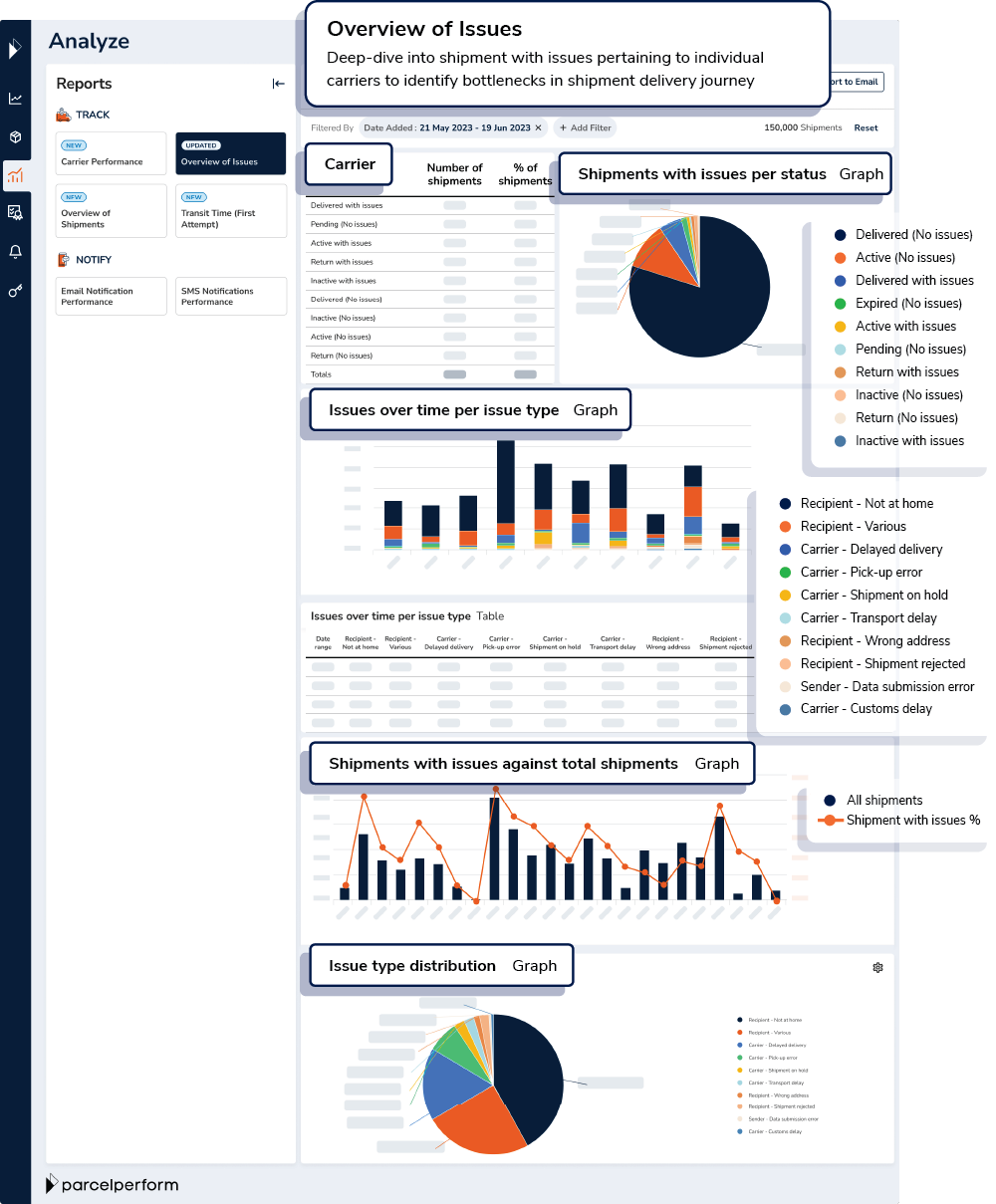
The Overview of Issues report allows you to identify and resolve shipment bottlenecks with graphs and charts such as Shipment Issues Over Time and Issue Type Distribution.
Parcel delays and exceptions can disrupt your operations and frustrate customers. The Overview of Issues report helps you get ahead of these problems by providing a clear picture of where and why they occur. By tracking 67 different delivery issues, you can:
Pinpoint root causes: Is it customs delays, carrier performance, or something else? The report helps you identify the underlying issues affecting your shipments.
Prioritize problem areas: Focus your efforts on the most frequent or impactful issues, maximizing the efficiency of your problem-solving efforts.
Proactively address bottlenecks: Anticipate potential supply chain disruptions and implement preventive measures to keep your shipments moving smoothly.
Improve carrier performance: Identify carriers with high issue rates and work with them to improve their service or explore alternative options.
Carrier Performance: Compare Carrier Performance to Optimize Shipping and Reduce Costs
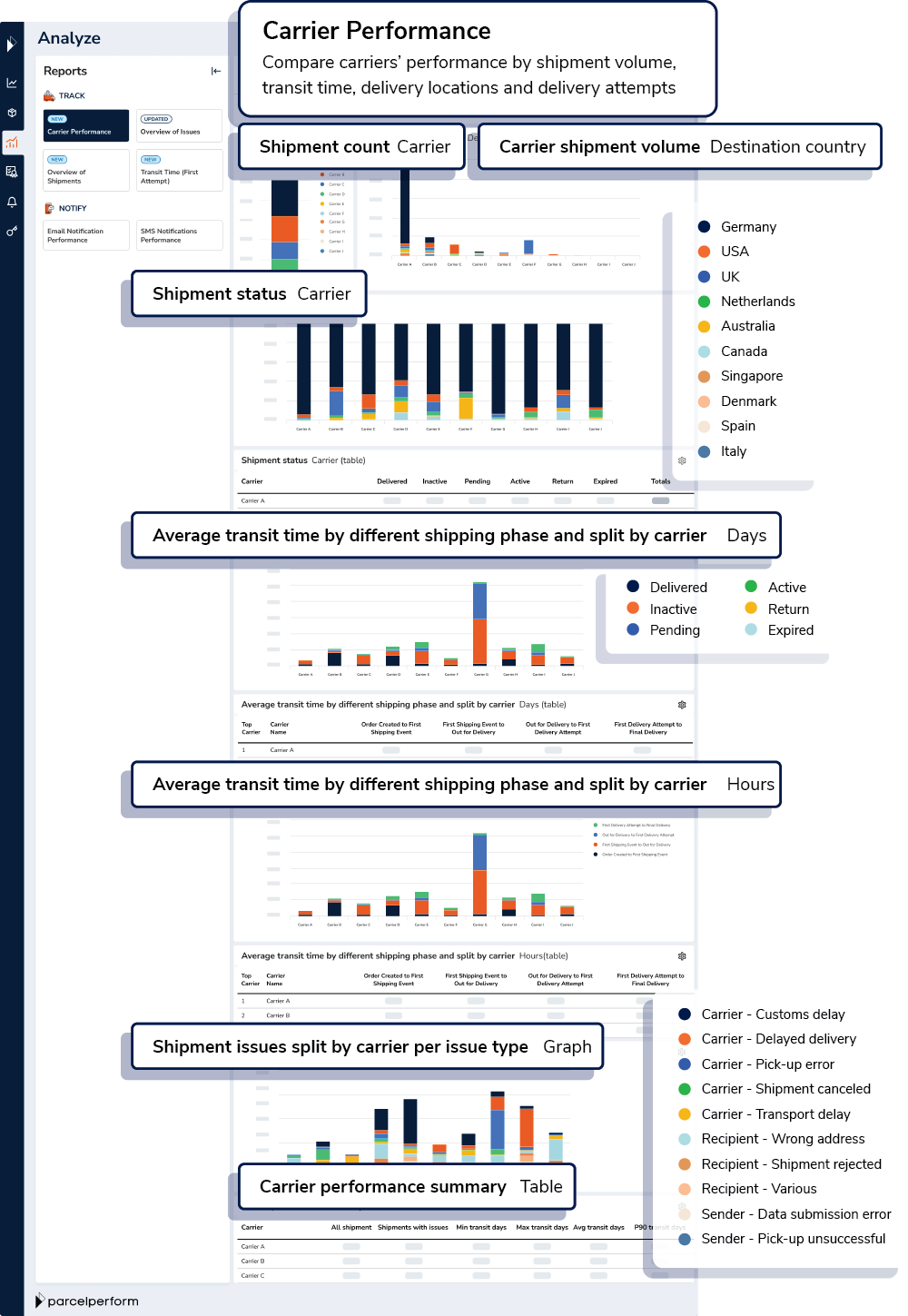
The Carrier Performance report allows you to compare your carriers’ performance by shipment volume, transit time, delivery locations and delivery attempts.
Choosing the right carriers and negotiating favorable rates are crucial for e-commerce success. The Carrier Performance report provides a detailed comparison of your carriers' performance across various metrics, including:
Transit times: See how quickly each carrier delivers shipments to different destinations, helping you meet customer expectations for fast shipping.
Shipping phases: Understand where delays occur within the shipping process (e.g., first mile, customs clearance, last mile), allowing you to pinpoint areas for improvement.
Issue rates: Identify carriers with high exception rates and work with them to improve their service or find more reliable alternatives.
Shipment volumes: Analyze the distribution of your shipment volume across carriers, enabling you to negotiate better rates or diversify your carrier mix.
Transit Time (First attempt) - Analyze and Improve Delivery Speeds to Meet Customer Expectations
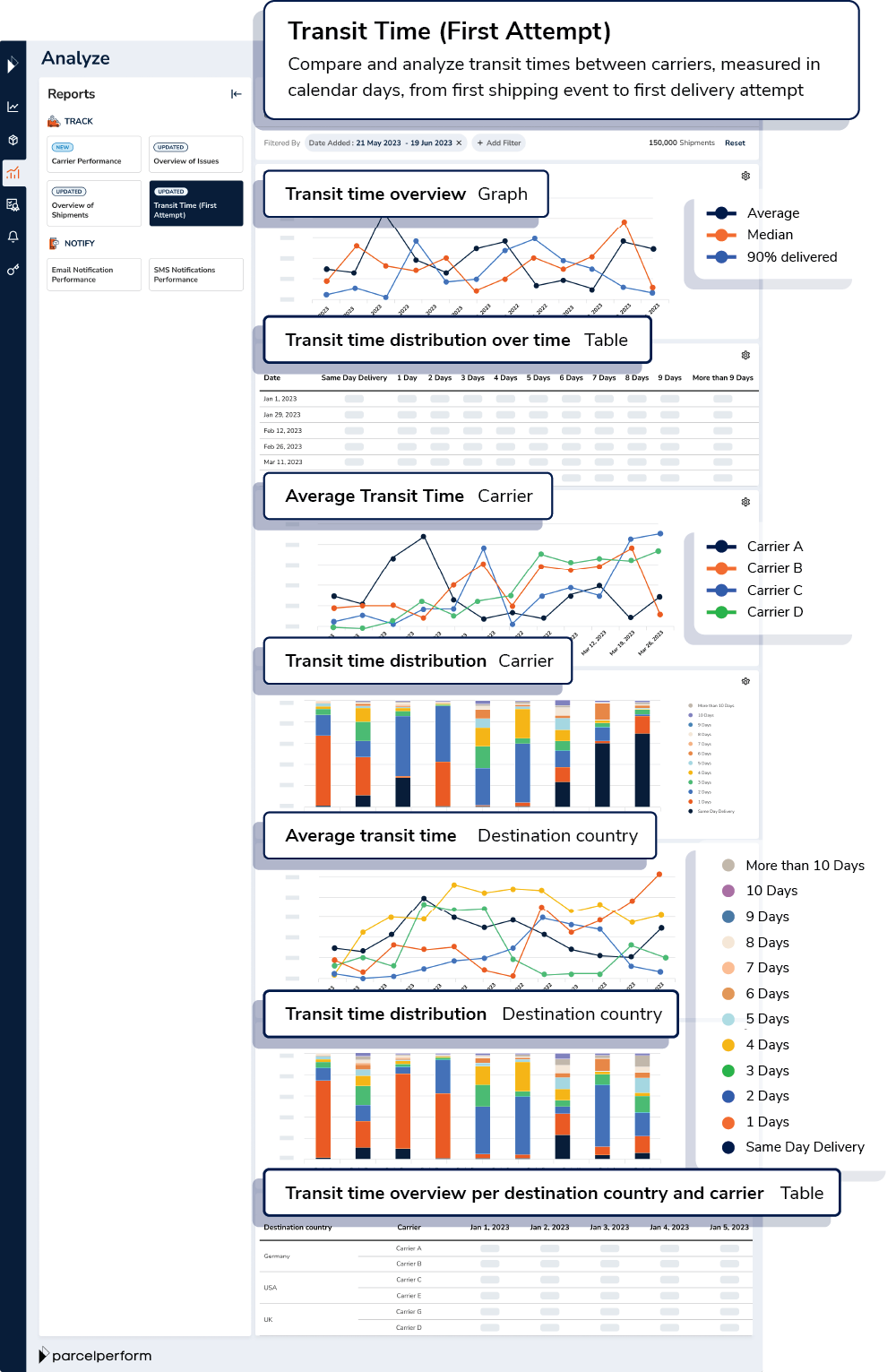
The Transit Time (First Attempt) Report allows you to conduct in-depth analysis and comparison of transit times between carriers, measured in calendar days, from first shipping event to first delivery attempt.
Fast shipping is a key driver of customer satisfaction and repeat purchases. The Transit Time report provides in-depth insights into your delivery speeds, helping you identify areas for improvement and ensure you're meeting your delivery promises. By analyzing transit times by carrier, destination, and shipping phase, you can:
Set realistic expectations: Understand your true delivery speeds and communicate accurate delivery estimates to customers, building trust and reducing WISMO inquiries.
Identify improvement opportunities: Pinpoint carriers or shipping lanes with slower transit times and work to optimize them.
Negotiate carrier SLAs: Use data-backed insights to negotiate service-level agreements with your carriers, ensuring they meet your performance standards.
Offer competitive shipping options: Provide customers with a range of shipping options that balance speed and cost, catering to their individual needs.
Gain the transparency you need on your supply chain and make informed decisions.
Getting data on your logistics setup doesn’t need to be a complicated process. With our standard logistics reports, built on industry best practices, you'll quickly gain a comprehensive overview of your shipping metrics and logistics KPIs. These reports provide a solid foundation for understanding your logistics performance and making data-driven improvements.
But for businesses aiming to achieve operational excellence and outpace the competition, a more sophisticated solution is often required. That's where Parcel Perform's AI-driven E-commerce Co-Pilot comes in.
Our purpose-built logistics AI complements the four logistics reports discussed in the blog post by offering a more advanced, proactive, and customizable approach to logistics intelligence. While the standard reports provide a solid foundation for understanding shipping performance, the Co-Pilot takes it a step further:
Set Ambitious Performance Targets: Beyond simply analyzing historical data, Co-Pilot allows businesses to set ambitious performance targets and track progress in real-time. This proactive approach helps identify areas for improvement and ensures continuous optimization.
Proactive Issue Detection and Alerts: Co-Pilot uses AI-powered algorithms to detect potential issues before they impact customers. This allows businesses to take preemptive action, minimizing disruptions and improving the overall delivery experience.
Customizable Dashboards and Reports: While the standard reports offer valuable insights, Co-Pilot provides fully customizable dashboards and report templates. This enables businesses to focus on the metrics that matter most to them and gain a more tailored view of their logistics performance.
Deeper Insights and Root Cause Analysis: Co-Pilot goes beyond surface-level metrics to provide deeper insights into the root causes of issues. This allows businesses to address underlying problems and implement long-term solutions, rather than just treating symptoms.
The E-commerce Co-Pilot acts as your intelligent assistant for AI-driven logistics management. We leverage artificial intelligence and advanced analytics to provide a deeper level of insight and control. If you're feeling overwhelmed by the complexity of your logistics data, struggling to keep up with customer expectations, or simply looking to take your shipping performance to the next level, E-commerce Co-Pilot can help. It's not just about reports; it's about how we can transform your logistics operations into a competitive advantage.
Don't let your logistics data go untapped. Book a demo with our e-commerce logistics experts to find out how you can seamlessly integrate, standardize, and analyze all your logistics data in one single platform. Let us unlock the full potential of your supply chain.

You might also like

The Compliance Time Bomb: Why Your Dropshipping Tech Stack is a Ticking Liability
Your app stack is a compliance risk. Stop patchwork liability. Move to a unified, secure platform for AI-readiness.
Feb 16, 2026