

Optimizing the Post-Purchase Journey: An E-commerce Guide to AI-Driven Enhancement
Apr 30, 2025
The moment a customer clicks "buy" is the beginning of the crucial post-purchase experience. This phase, encompassing everything from order confirmation to final delivery and potential returns, is where customer loyalty is truly won or lost, significantly impacting Customer Lifetime Value. Yet, many e-commerce businesses drop the ball here, leading to frustrated customers, strained support teams, and eroded profits. How often are your customer service agents answering time-consuming "Where Is My Order?" (WISMO) calls? These inquiries, often stemming from communication gaps or delivery uncertainty, can represent 21% of all support tickets, spiking to nearly half during peak seasons. This isn't just a cost drain; it signals a fundamental disconnect in the customer experience.
A single poor post-purchase experience can have devastating consequences far beyond a lost sale. Studies show 33% of customers will switch to a competitor after just one negative interaction, and poor service is a major driver of churn. Conversely, getting the e-commerce delivery experience right drives significant value. Over 85% of consumers cite fast, reliable shipping as a key factor in their purchasing decisions, and positive experiences foster customer retention, turning one-time buyers into loyal advocates. The good news? Artificial Intelligence (AI) offers powerful tools to move beyond reactive problem-solving and create proactive, personalized, and efficient post-purchase journeys that build trust and loyalty.
This post, drawing from our downloadable checklist, explores how AI can optimize key elements of the post-purchase phase. We'll use a five-level AI Strategy Check to help you assess your current capabilities and identify opportunities for AI post-purchase optimization, transforming a potential cost center into a powerful engine for growth and competitive differentiation.
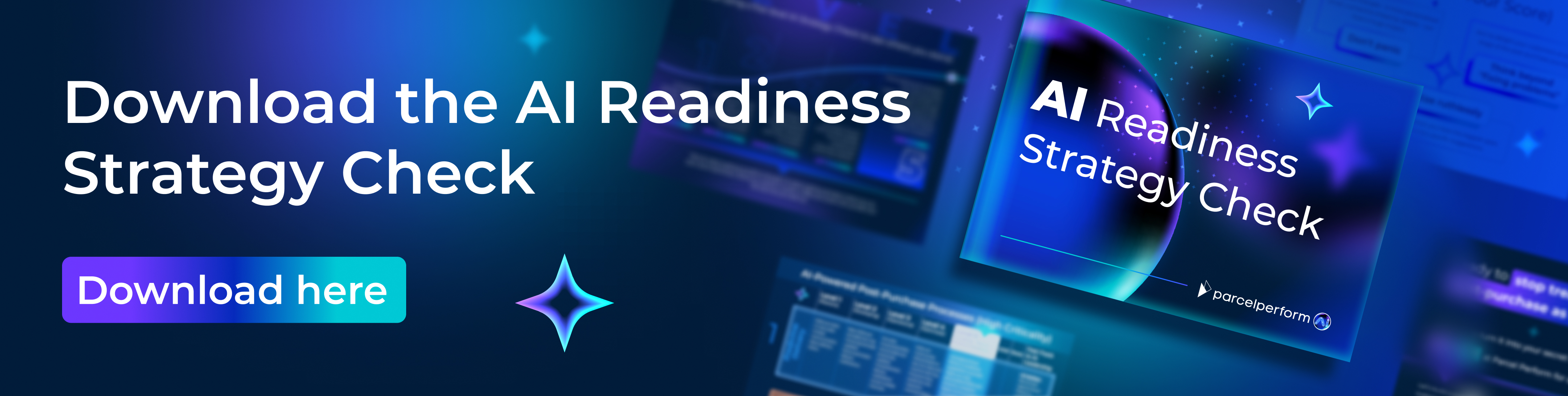
The Post-Purchase AI Strategy Check: Where Do You Stand?
Similar to our data readiness assessment, we use a scale to evaluate your post-purchase AI strategy. Accurately identifying your current level is key to planning effective improvements.
Level 1: Nascent: Post-purchase processes are largely manual and reactive. Communication relies on customers initiating contact. Visibility into order status is minimal or requires manual lookup by staff. AI is absent. Support teams are overwhelmed with basic status requests.
Level 2: Developing: Basic automation begins (e.g., template-based shipping confirmation emails). A simple tracking link to a carrier site might be provided. Early exploration of AI tools may occur in isolation, without integration. Data remains siloed.
Level 3: Operational: Standard automated notifications cover key delivery milestones (shipped, out for delivery, delivered). A functional branded tracking page offers consolidated, albeit basic, status updates. AI might be used for descriptive analytics, providing historical reports on delivery performance.
Level 4: Optimized: Proactive communication is standard, powered by AI-driven predictive delivery alerts. Customer communication is personalized based on segments and real-time delivery events. AI provides predictive insights (e.g., likely delay risks). The returns process is streamlined, potentially using AI to suggest alternatives or optimize routing.
Level 5: Leading: The entire post-purchase journey is orchestrated by AI, offering hyper-personalized customer experiences. AI anticipates and proactively resolves potential issues (e.g., automatically notifying a customer of a weather delay and offering a small discount on their next order). Data flows seamlessly across all systems, providing real-time analytics and prescriptive insights that drive continuous improvement. Returns are frictionless and data-driven. Platforms like Parcel Perform's Post-Purchase Experience solution are instrumental in achieving this level.
Understanding your current level across different post-purchase functions – from communication to returns – is the first step toward targeted, impactful improvement.
Optimizing Delivery Communication & Visibility with AI
Communication silence after checkout breeds anxiety and erodes trust. Customers today expect timely, relevant, and easily accessible updates. Failing here directly fuels costly WISMO inquiries and pushes customers toward competitors. AI provides the tools to meet and exceed these expectations.
Automated & Proactive Notifications
Manual notifications are inefficient, inconsistent, and simply not scalable for modern e-commerce volumes. AI elevates automated notifications from basic status updates to proactive, intelligent communication.
Operational Reality (Level 3): Customers receive standard emails when an item ships and is delivered. These are functional but lack personalization or proactive warnings about potential issues.
Optimized Approach (Level 4): AI analyzes real-time data streams (carrier scans, traffic, weather) to predict delays before they become critical. This triggers personalized proactive delivery notifications via the customer's preferred channel (email, SMS, app). Instead of just saying "shipped," the message might include an AI-powered EDD. Studies suggest this proactive approach significantly enhances customer satisfaction and can dramatically reduce WISMO calls, with some systems achieving 70-95% reductions.
Leading Edge (Level 5): Communication becomes part of a hyper-personalized customer experience. Notifications are timed based on customer behavior (e.g., sending an "out for delivery" alert closer to the actual event for customers known to prefer precise updates), content is tailored (e.g., including related product recommendations), and the entire flow is managed seamlessly by platforms like Parcel Perform, ensuring brand consistency and maximizing engagement.
Action: Implement robust automation covering all critical delivery milestones. Prioritize integrating AI for accurate EDDs and predictive, proactive alerting. Define notification triggers, channel preferences, and content strategies to enhance, not annoy, the customer.
Real-Time Tracking & Visibility
Providing customers with easy, intuitive access to accurate tracking information is non-negotiable. A generic link to a carrier's website creates a disjointed experience and misses valuable branding and engagement opportunities.
Operational Reality (Level 3): A functional branded tracking page might exist, pulling basic data via carrier APIs. However, it might suffer from inconsistent information presentation across different carriers or lack true real-time updates.
Optimized Approach (Level 4): The branded tracking page offers consolidated real-time shipment tracking across all carriers used (multi-carrier tracking), often featuring map visualizations. Crucially, it displays highly accurate Estimated Delivery Dates (EDDs) calculated using AI, considering numerous factors beyond simple carrier estimates. This accuracy builds immense trust.
Leading Edge (Level 5): The branded tracking page evolves into a dynamic post-purchase hub. Powered by sophisticated platforms like Parcel Perform's Post-Purchase Experience, it integrates AI-driven EDDs, proactive alert summaries, personalized marketing content (e.g., loyalty program updates, related product suggestions based on the purchase), easy access to support (including AI chatbots), and seamless initiation of returns. It becomes a destination that reinforces brand value long after the initial purchase.
Action: Invest in a high-quality branded tracking page solution. Ensure it integrates data from all your shipping carriers seamlessly. Prioritize platforms that leverage AI for superior EDD accuracy and offer customization options to create a true brand extension.
Leveraging AI for Proactive Issue Resolution & Support
Waiting for customers to report delivery problems is a recipe for dissatisfaction and operational inefficiency. AI empowers businesses to shift from a reactive stance to a proactive one, anticipating and addressing issues, often before the customer is even aware.
Predictive Delay Management
The ability to foresee potential delays is a game-changer. AI algorithms excel at analyzing complex datasets – historical carrier performance on specific lanes, current network congestion, weather patterns, traffic data – to predict disruptions with far greater accuracy than traditional methods.
Operational Reality (Level 3): Support teams might receive basic alerts for widespread carrier disruptions (e.g., major weather events), but lack insight into specific at-risk shipments.
Optimized Approach (Level 4): AI predictive analytics constantly scans shipment data, flagging individual parcels showing a high probability of delay. This triggers automated workflows: proactive notification to the customer, alerting the support team, perhaps even initiating investigation with the carrier.
Leading Edge (Level 5): AI doesn't just predict; it triggers automated resolution attempts within the integrated logistics experience platform. This might involve automatically offering the customer a small credit, providing alternative delivery options if feasible, or escalating complex cases to specialized support tiers with full context, minimizing customer frustration and manual effort.
Action: Implement AI tools capable of predictive delivery alerts. Ensure your logistics data platform provides the granular, real-time data needed for accurate predictions. Define clear internal workflows for handling AI-flagged potential issues.
AI-Powered Customer Service
AI is revolutionizing customer service, particularly for handling the high volume of repetitive inquiries common in e-commerce logistics. This frees human agents to tackle more complex, value-added interactions.
Operational Reality (Level 3): Basic, rule-based chatbots might handle simple keyword triggers for WISMO, often frustrating users with limited capabilities and forcing them to seek human agents anyway.
Optimized Approach (Level 4): Sophisticated AI-powered chatbots utilize natural language processing (NLP) to understand user intent accurately. Integrated via API with real-time tracking systems (like Parcel Perform), they provide instant, accurate answers to a vast majority of delivery-related questions, 24/7. Chatbots can handle up to 80% of customer inquiries, drastically reducing agent workload and customer wait times. Tools like Parcel Perform's Ecommerce Copilot can also empower human agents, providing them with instant access to relevant information and suggested responses.
Leading Edge (Level 5): AI acts as an intelligent front line, seamlessly resolving most inquiries instantly. For complex issues, AI routes the query to the best-suited human agent, providing the full conversation history and relevant order/shipment data, eliminating the need for the customer to repeat themselves. Furthermore, AI analyzes interaction data to identify recurring problems or friction points in the delivery process, providing valuable feedback to Logistics and Operations teams for systemic improvements. The impact is significant, with reports showing AI reducing query resolution times from 38 hours to just 5.4 minutes and potentially cutting service costs by 30% or more.
Action: Deploy advanced AI chatbots deeply integrated with your order management and real-time logistics data. Provide AI-powered tools to your human support agents to enhance their efficiency and effectiveness. Analyze chatbot interaction data to identify improvement opportunities.
Optimizing the Returns Experience with AI
E-commerce returns are an expensive reality, impacting profitability and potentially damaging customer relationships if handled poorly. The average return rate hovers around 16.9%, and processing each return can cost a significant portion of the item's value. AI offers opportunities to make returns management smarter, more efficient, and less painful for everyone involved.
Intelligent Returns Initiation & Processing
Simplifying the returns process is crucial, as 67% of shoppers check the return policy before buying, and a difficult process deters future purchases.
Operational Reality (Level 3): A basic self-service portal allows customers to initiate returns and print labels, but offers little intelligence or flexibility. Processing relies on manual checks upon receipt.
Optimized Approach (Level 4): The returns portal becomes more interactive. AI analyzes the stated return reason and product information to intelligently suggest alternatives during the initiation process (e.g., offering a partial refund, suggesting a different size/color exchange, providing troubleshooting steps for defective items). This can deflect unnecessary returns entirely.
Leading Edge (Level 5): AI plays a central role throughout the returns journey, orchestrated via platforms like Parcel Perform's Returns Experience. It might dynamically offer the most cost-effective return method (drop-off, pickup, label-less) based on location and item value. AI can analyze patterns in returns data (product attributes, customer segments, reasons) to provide prescriptive insights to merchandising and product teams, helping address root causes and reduce future return rates. Integration with inventory systems ensures faster processing and credit issuance upon validated return tracking events.
Action: Enhance your self-service returns portal with AI-driven logic to guide customers and potentially deflect returns. Analyze returns data rigorously to identify trends and root causes. Explore integrated returns platforms that leverage AI for logistics optimization and faster processing.
Achieving Post-Purchase Excellence Through AI
Investing strategically in AI for the post-purchase experience is no longer optional for ambitious e-commerce brands. It's fundamental to cutting operational costs, building customer trust, and fostering the loyalty that drives sustainable growth. Remember, delivering a positive experience consistently is key, as 70% of consumers expect a seamless omnichannel experience, and meeting that expectation significantly boosts retention.
Moving up the AI post-purchase maturity scale requires a conscious effort:
Map the Journey: Deeply understand every customer touchpoint and internal process from checkout to final resolution (including returns). Identify bottlenecks and friction points.
Prioritize Pain Points: Focus initial AI investments where they'll have the biggest impact – typically areas with high manual effort, significant customer frustration (like WISMO), or high costs (like returns processing).
Integrate Data & Systems: Break down silos. Ensure seamless, real-time data flow between your e-commerce platform, OMS, WMS, CRM, logistics partners, and AI tools. Robust API integration and effective e-commerce data management are prerequisites. Platforms specializing in carrier integration and data harmonization, like Parcel Perform, are invaluable here.
Leverage Predictive Power: Actively implement AI not just for reporting, but for forecasting – predictive EDDs, delay alerts, potentially even returns likelihood or optimal routing.
Personalize Intelligently: Use the rich data AI unlocks to tailor communication, offers, and support interactions, making each customer feel understood and valued.
Choose the Right Partners: Select technology partners, like Parcel Perform, that offer end-to-end visibility, robust AI capabilities specifically designed for e-commerce logistics complexities, and a clear roadmap for future innovation across the entire post-purchase experience.
By embracing AI post-purchase optimization, you transform a stage often viewed as a cost center into a powerful differentiator. You build trust through transparency, delight customers with proactive support, reduce operational overhead, and ultimately cultivate the loyalty that fuels long-term success.
Ready to elevate your post-purchase strategy from operational necessity to competitive advantage using AI? Discover Parcel Perform's solutions and request a demo today.

You might also like
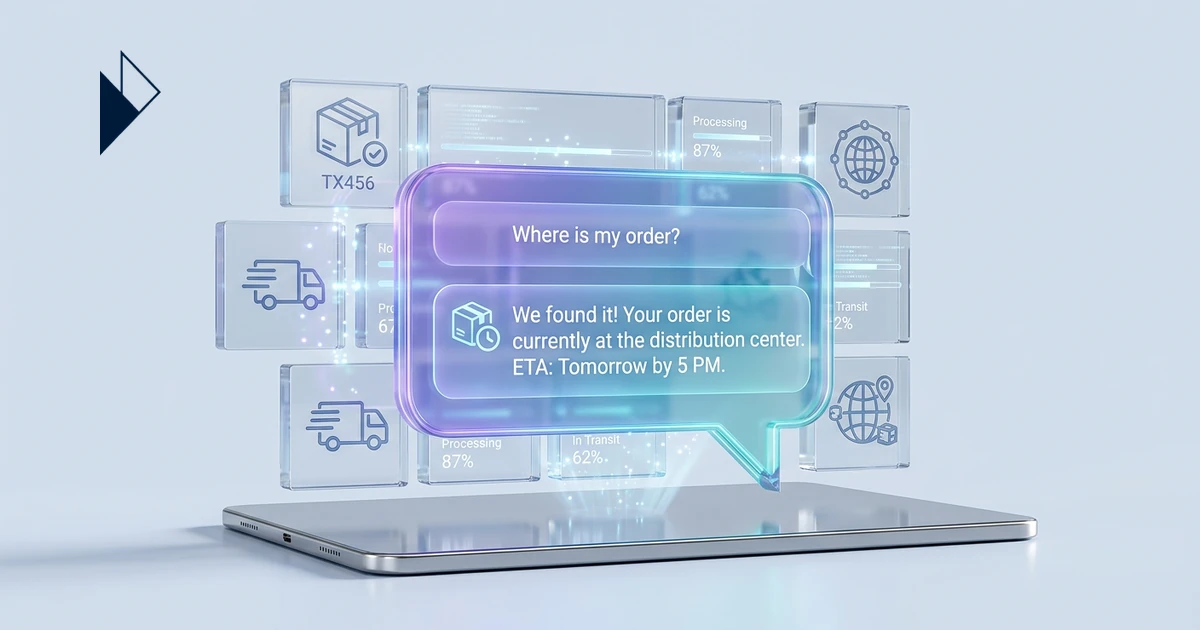
Ecommerce Conversational Commerce: Answering WISMO Inside the Chat
Stop WISMO from draining your margins. See how AI-driven chat turns delivery anxiety into scalable brand loyalty.
Aug 18, 2026
Parcel Perform
Ecommerce AI Returns Management: Cutting Reverse-Logistics Cost with Prediction
Cut reverse logistics costs with e-commerce AI returns management. Turn return data into margin protection and profit.
Aug 17, 2026
Parcel Perform
Ecommerce AI Personalization: Using Post-Purchase Behavior to Tailor Experience
Turn post-purchase behavior into a retention engine. See how AI personalization drives loyalty and cuts WISMO.
Aug 14, 2026
Parcel Perform